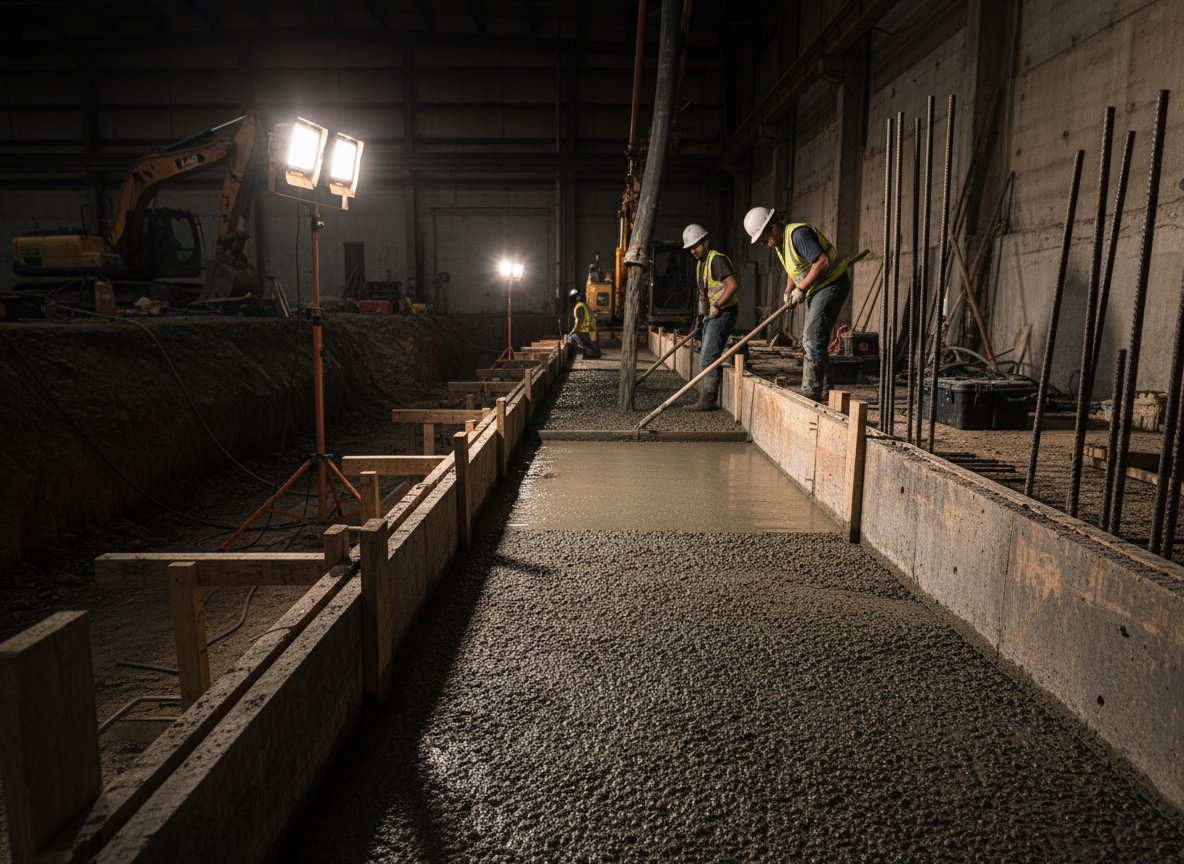
Why This Repair Matters
Concrete foundations in Laval are subject to years of freeze-thaw cycling, de-icing salt exposure, and chemical attack from acidic groundwater. Spalling, scaling, and honeycombing deteriorate the concrete over time, compromising both aesthetics and structural capacity. Our concrete repair solutions restore your foundation to full strength.
Key Benefits
- Restores structural load capacity
- Stops deterioration from spreading
- Protects against water infiltration
- Improves appearance and resale value
- Polymer-modified materials for durability
How Laval's Climate Destroys Concrete Foundations
Concrete is a durable material, but it has a natural enemy in Quebec's climate: water and freeze-thaw cycling. Water penetrates the porous surface of concrete and, when temperatures drop below freezing, expands by approximately 9% in volume. This internal pressure is called cryogenic pressure, and when it exceeds the tensile strength of the concrete surface, the outer layer physically flakes off — a process called freeze-thaw spalling.
In Laval, this process is accelerated by road salt and de-icing chemicals. Chloride ions from salt penetrate the concrete and attack the steel reinforcing bar (rebar) inside, causing it to rust. Rust expands to three to four times the volume of the original steel, cracking the concrete around it from the inside out — a process called reinforcement corrosion spalling. Homes along major Laval arterials and those with salt-treated driveways adjacent to the foundation are particularly vulnerable.
Acidic groundwater is the third culprit. Soils with decaying organic matter release carbonic and humic acids that slowly dissolve cement paste from the concrete matrix — a process called acid attack or carbonation. In areas of Laval with high organic soil content, foundations can show significant surface deterioration within 30–40 years.
Concrete Repair Methods: Matching Solution to Problem
Effective concrete repair requires correctly identifying the failure mechanism and selecting the appropriate repair material and technique. Surface application of a patch over unsound concrete is one of the most common and costly mistakes in the industry — the new material will de-bond within years without proper surface preparation to sound substrate.
For surface spalling and scaling, the deteriorated concrete is first removed by mechanical means — angle grinding, jackhammering, or hydrodemolition — back to sound, uncontaminated material. Polymer-modified cementitious repair mortars are then applied in layers, each carefully cured. These materials are formulated to match the thermal expansion coefficient of the existing concrete and bond chemically to the substrate.
For sections with rebar corrosion, exposed steel must be cleaned to bare metal and treated with a corrosion-inhibiting coating before any concrete is applied. In severe cases, rebar replacement may be required. For honeycombed concrete (areas that were improperly consolidated during original placement), the voids are typically filled with low-viscosity epoxy or cementitious grout injected under pressure.
Full section replacement is reserved for situations where the concrete is structurally compromised throughout a wall or footing section — a much less common scenario but one we handle with engineered shoring plans to safely support the structure during replacement.
Protecting Your Repaired Concrete
The best investment after any concrete repair is a quality protective treatment to prevent recurrence. Several options exist depending on exposure conditions and aesthetic preferences.
Crystalline waterproofing admixtures react with cement and moisture to form insoluble crystals within the concrete pores, blocking water penetration from any direction and self-sealing micro-cracks as they form. Applied topically or mixed into repair mortars, crystalline treatments provide long-term moisture protection ideal for below-grade foundation conditions throughout Laval.
Penetrating silane/siloxane sealers repel water at the surface without forming a film that could trap moisture or peel. They are the preferred choice for above-grade exposed concrete surfaces subject to freeze-thaw cycling, providing 5–10 years of protection per application.
Elastomeric coatings bridge hairline cracks and provide a durable waterproof membrane on vertical and horizontal surfaces. They accommodate minor movement and resist UV degradation, making them suitable for visible foundation walls on homes throughout Chomedey, Fabreville, Sainte-Rose, and across Laval.
We serve all Laval neighborhoods for concrete foundation repair including Chomedey, Vimont, Duvernay, Fabreville, Sainte-Rose, Auteuil, Pont-Viau, Laval-des-Rapides, Sainte-Dorothée, Saint-François, Saint-Vincent-de-Paul, and Laval-Ouest. Free condition assessments available.
Related Services
View All ServicesFoundation Crack Repair
Permanent crack sealing using advanced epoxy and polyurethane injection — trusted by hundreds of Laval homeowners.
Learn moreBasement Waterproofing
Interior and exterior waterproofing systems engineered for Laval's climate — keep your basement dry year-round.
Learn moreStructural Foundation Repair
Strengthen bowing and leaning foundation walls with carbon fiber reinforcement and steel I-beam systems.
Learn moreHow We Work
Condition Assessment
We evaluate the extent of deterioration, identify causes, and determine whether patching or replacement is appropriate.
Surface Preparation
Deteriorated concrete is removed by mechanical means to expose sound substrate.
Repair Application
Polymer-modified concrete or structural repair mortar is applied in layers to restore section geometry.
Curing & Protection
The repair is cured properly and a protective sealer is applied to resist future deterioration.
Common Questions
Can spalling concrete be repaired without full replacement?
Yes — surface spalling and scaling can typically be addressed with resurfacing or patching. Full replacement is only needed when the concrete is structurally compromised throughout.
What causes concrete spalling?
Freeze-thaw cycling, de-icing salts, carbonation, rebar corrosion, and acid attack from soil are the main causes in Laval's climate.
How long do concrete repairs last?
When properly prepared and applied, quality concrete repairs can last 20+ years. Protective sealers applied afterward significantly extend the service life.
How do I know if my concrete is structurally compromised?
Structural compromise is indicated by deep voids (honeycombing), exposed rebar throughout a large section, crack widths exceeding 5mm, or any section that sounds hollow when tapped. Our inspectors assess this during the free evaluation.
Can you repair concrete in winter?
Yes — with proper cold-weather procedures including insulated curing blankets and temperature-controlled materials, concrete repairs can be performed in sub-zero conditions. We operate year-round throughout Laval.
Get Your Free Foundation Inspection
No obligation. No pressure. Written assessment provided before any repair recommendations.
Free Foundation Inspections
No-obligation assessments with a written report included
Licensed & Insured
Fully licensed foundation repair contractor in Quebec
Written Warranty Available
Comprehensive written warranties on all repair work