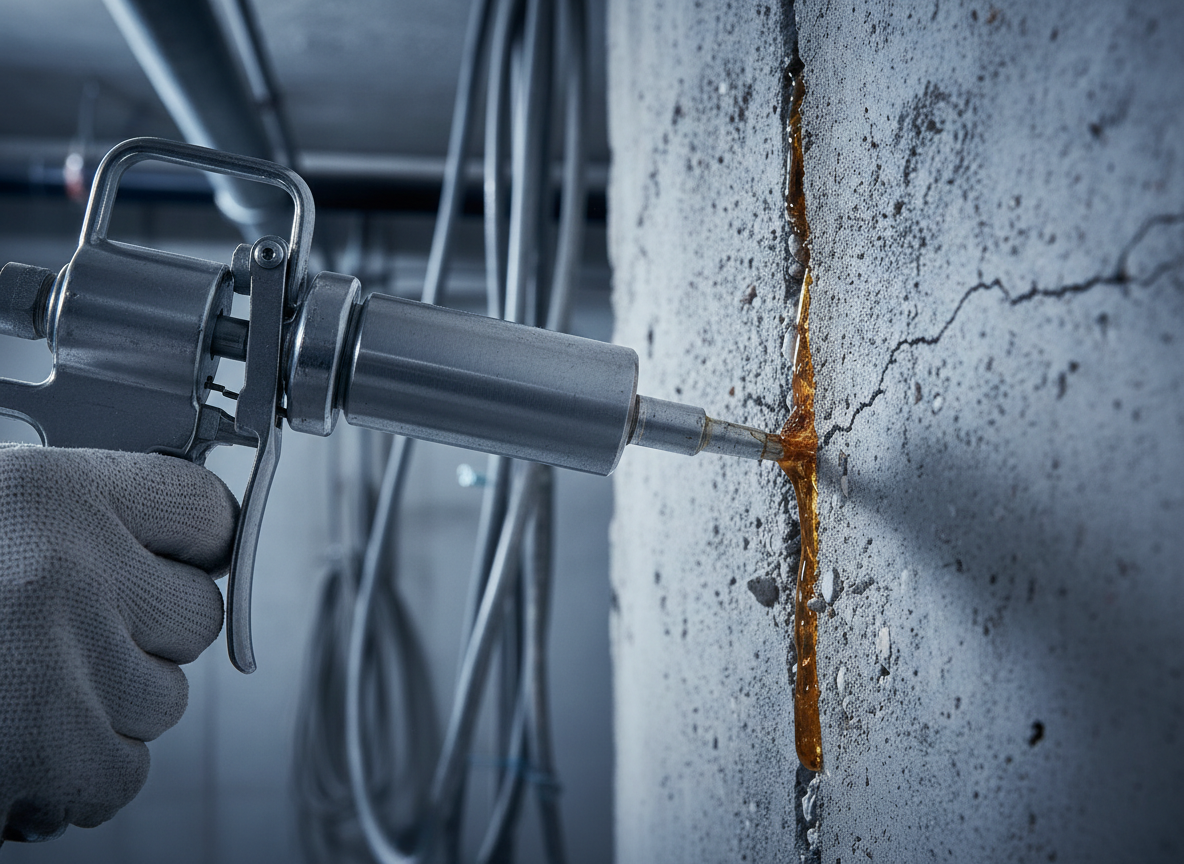
Why This Repair Matters
Foundation cracks are one of the most common — and most misunderstood — problems homeowners in Laval face. Whether caused by soil movement, freeze-thaw cycles, or hydrostatic pressure, untreated cracks can lead to water infiltration, mold, and serious structural compromise.
Key Benefits
- Stops water infiltration permanently
- Prevents further crack propagation
- Restores structural integrity
- Protects against mold and efflorescence
- Backed by a transferable warranty
Understanding Foundation Cracks in Laval
Laval's unique geological profile — characterized by marine clay deposits left by the Champlain Sea — makes foundations especially susceptible to cracking. As seasons change, the soil expands when wet and contracts during dry periods, exerting cyclical pressure against your foundation walls. Quebec's extreme freeze-thaw cycling (often 40–60 freeze-thaw events per year) further accelerates this movement, opening hairline cracks into serious structural defects over time.
Not all foundation cracks are created equal. Vertical cracks are typically caused by concrete curing shrinkage or minor settlement and are usually non-structural, but they are a direct pathway for water infiltration. Horizontal cracks are the most serious — they indicate lateral soil pressure pushing inward against the wall and may signal imminent wall failure. Diagonal or stair-step cracks usually point to differential settlement, where one section of the foundation sinks faster than another.
Homeowners in Chomedey, Vimont, Duvernay, Sainte-Rose, and Fabreville regularly contact us about new cracks appearing after spring thaw. In most cases, early intervention with professional epoxy or polyurethane injection prevents hundreds of hours of water damage and mold remediation downstream.
Epoxy vs. Polyurethane: Choosing the Right Method
The two primary injection methods for foundation crack repair are epoxy resin injection and polyurethane foam injection. Each has specific applications where it excels.
Epoxy injection is ideal for structural cracks in dry or slightly damp conditions. Epoxy cures to a compressive strength exceeding that of the surrounding concrete, effectively making the repaired crack stronger than it was originally. It bonds the two sides of the crack together, restoring full structural continuity. This method is preferred for load-bearing walls with structural cracks that need reinforcement.
Polyurethane foam injection is the superior choice for actively wet or leaking cracks. The foam expands on contact with moisture, filling the void completely and creating a flexible, waterproof seal. It accommodates minor ongoing movement without re-cracking, making it excellent for Laval's dynamic soil conditions. For most residential foundation cracks in Auteuil, Pont-Viau, and Laval-des-Rapides, polyurethane foam is the go-to solution.
Our technicians assess each crack individually — measuring width, depth, moisture level, and crack pattern — before recommending the most appropriate injection method. Many projects require both materials applied strategically across different sections.
The Long-Term Cost of Ignoring Foundation Cracks
A single unrepaired foundation crack may seem minor initially, but the downstream costs compound quickly. Water infiltrating through a crack creates ideal conditions for black mold growth, which can spread throughout wall cavities and HVAC systems, triggering expensive remediation projects. Chronic moisture also degrades concrete over time through a process called freeze-thaw spalling, where water absorbed into the concrete expands during winter and physically breaks the surface apart.
Beyond moisture damage, unrepaired cracks can widen progressively due to ongoing freeze-thaw pressure, eventually requiring full wall replacement instead of simple injection repair. In homes throughout Sainte-Dorothée, Saint-François, and Laval-Ouest, we frequently see situations where a $600 crack injection would have prevented a $12,000 waterproofing and reconstruction project.
All our crack repair work is backed by a transferable written warranty. We also address the root cause — whether drainage improvement, downspout extension, or soil grading — to prevent recurrence.
Related Services
View All ServicesBasement Waterproofing
Interior and exterior waterproofing systems engineered for Laval's climate — keep your basement dry year-round.
Learn moreStructural Foundation Repair
Strengthen bowing and leaning foundation walls with carbon fiber reinforcement and steel I-beam systems.
Learn moreFrench Drain Installation
Interior and exterior French drain systems designed to manage groundwater and protect your foundation year-round.
Learn moreHow We Work
Free Inspection
We assess the crack type, width, depth, and cause to determine the right repair method.
Surface Preparation
The crack area is cleaned, dried, and prepped to ensure optimal adhesion.
Injection
Low-pressure epoxy or polyurethane foam is injected to fill the crack from the inside out.
Seal & Finish
The surface is sealed and finished for a clean, permanent result.
Common Questions
How long does crack repair take?
Most crack repairs are completed in 2–4 hours, depending on the length and number of cracks. You can return to normal activities immediately after.
Will the crack come back?
Properly injected cracks are permanently sealed. If new movement occurs, new cracks may form but the repaired crack will hold. We address root causes to minimize recurrence.
Is epoxy or polyurethane better?
Epoxy restores structural strength and is ideal for dry, structural cracks. Polyurethane foam is better for wet or actively leaking cracks. Our technicians select the right method on-site.
What size crack needs professional repair?
Any crack wider than 1/8 inch (3mm), any horizontal crack, or any crack allowing water entry should be professionally evaluated immediately. Hairline shrinkage cracks can often be monitored.
Do you repair cracks from the inside or outside?
Most of our repairs are performed from the interior, which is less invasive and equally effective. Exterior repairs are only required in specific cases where interior access is insufficient.
Get Your Free Foundation Inspection
No obligation. No pressure. Written assessment provided before any repair recommendations.
Free Foundation Inspections
No-obligation assessments with a written report included
Licensed & Insured
Fully licensed foundation repair contractor in Quebec
Written Warranty Available
Comprehensive written warranties on all repair work